

Let’s be straight with you. If you’re reading this, you’re probably either under pressure to source precision-machined parts for the first time or you’ve had a bad experience and want to make sure it doesn’t happen again. Either way, you’re in the right place.
Outsourcing CNC machining — whether that’s CNC turning, CNC milling, or specialist processes like Swiss machining — can feel like stepping into a world with its own language, its own rules, and its own ways of catching you out if you don’t know what to ask. Tolerances. Lead times. RFQ processes. Material grades. Surface finishes. It adds up fast.
This guide will walk you through everything a first-time buyer needs to know, in plain terms, with no fluff. By the end, you’ll know what to expect at every stage, from sending your first drawing to taking delivery of finished parts.
1. Understand What CNC Machining Actually Is (and Isn’t)
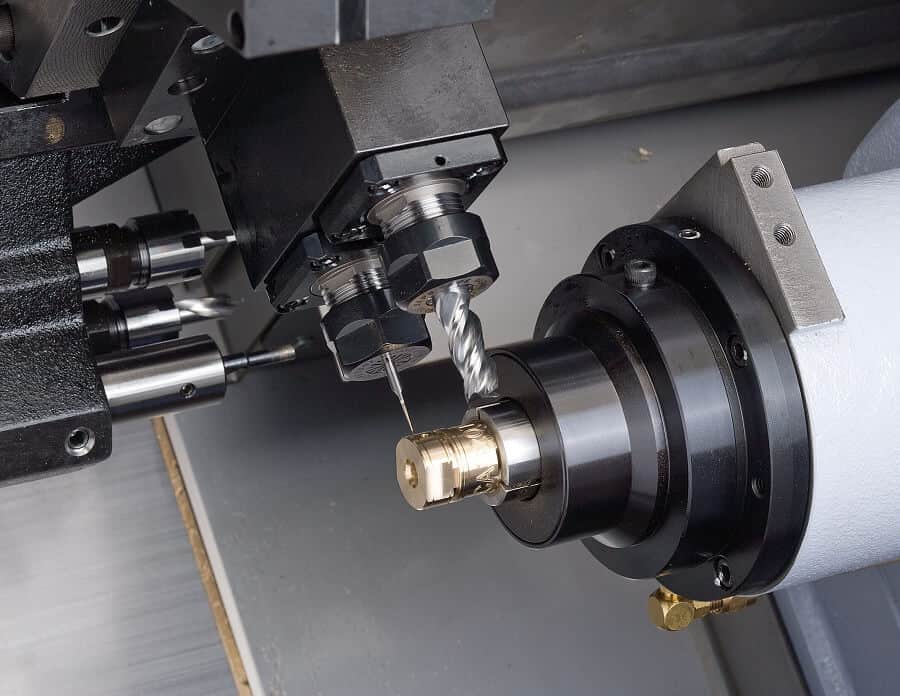
CNC stands for Computer Numerical Control. In basic terms, a machine tool — a lathe, milling machine, or specialist centre — is guided by a digital programme to remove material and create a part to your exact specification.
CNC turning is where the workpiece rotates while a cutting tool shapes it; typically used for cylindrical, threaded, or rotationally symmetric parts. CNC milling is the reverse: the workpiece is fixed while a rotating cutter removes material, which makes it suited to more complex geometries, pockets, and flat surfaces.
Swiss machining — sometimes called Swiss screw machining — is a more specialist form of CNC turning. It handles long, thin, highly complex parts with exceptional accuracy. If you’re sourcing small-diameter, high-tolerance components in quantity, Swiss machining is often the answer.
What CNC machining is NOT:
- It’s not 3D printing — CNC is subtractive (material is removed), not additive
- It’s not casting or forging — machined parts are cut from billet, giving far tighter tolerances
- It’s not suitable for every geometry — deep internal cavities or undercuts have design limitations
- It’s not slow — modern CNC centres are fast, accurate, and repeatably consistent
If you’ve been quoted for ‘turned parts’ and aren’t sure what that means — those are parts produced via CNC turning. Most precision components with a round or cylindrical profile fall into this category.
2. Prepare a Proper Technical Drawing. Seriously.
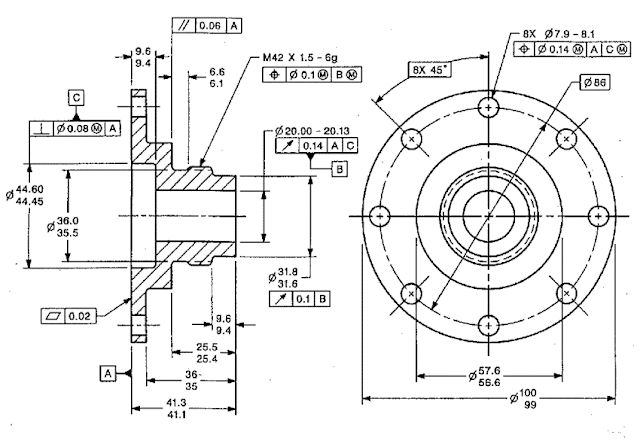
This is the single thing that causes the most delays, misquotes, and frustration on both sides. If you send a napkin sketch or a rough CAD screenshot and ask for a price, you’re not going to get an accurate one, or you’re going to get a price built on assumptions that may not reflect what you actually need.
A good technical drawing for CNC machining should include:
- Material specification: Don’t just say ‘aluminium’ — specify the grade. 6082-T6 and 2011-T3 behave very differently in machining and have different properties in service.
- Tolerances: Mark up critical dimensions with tolerances. General tolerances (e.g. ±0.1mm) should be stated. Tighter tolerances cost more — only specify them where genuinely needed.
- Surface finish requirements: Ra values, anodising, plating, or other treatments should be specified clearly.
- Thread specifications: State thread form, pitch, and class — don’t rely on the machinist to guess.
- Quantities: Both immediate need and likely repeat volumes. This affects pricing, setup amortisation, and sometimes material sourcing.
- File format: PDF drawings plus DXF or STEP files where possible. STEP files are particularly useful for complex 3D geometries.
If your drawing was made 10 years ago and lives in a filing cabinet, scan it and discuss it with your machining partner before submitting. Outdated standards and unclear tolerancing can cause expensive problems downstream.
3. Materials: Choosing the Right One Is Not Guesswork
One of the most common errors first-time buyers make is under-specifying — or over-specifying — material. Both cost you money.
Aluminium CNC machining is typically the most accessible starting point for new buyers — lower material costs, faster cycle times, and a good strength-to-weight ratio. If your application demands more, such as higher temperatures, chemical exposure, or greater mechanical load, your machining partner should be advising you on alternatives before they quote.
4. The RFQ Process: What Happens After You Send Your Drawing
RFQ stands for Request for Quotation. It’s the formal process by which a machining supplier reviews your technical requirements and comes back with a price, lead time, and any technical queries.
Here’s what a good RFQ process looks like, step by step:
- Drawing review: Your supplier examines the drawing for completeness, manufacturability, and any potential issues. A good partner will flag concerns at this stage rather than price them in silently.
- Technical questions: Expect queries on tolerance stack-up, material alternatives, or surface finish. This is a good sign — it means they’re actually reading the drawing.
- Quotation issued: Price per part (usually broken down by quantity), tooling or setup costs if applicable, and an estimated lead time.
- Order confirmation: Once agreed, a purchase order is raised. At this stage, critical dimensions and tolerances are locked in.
- First article inspection (FAI): For new parts, many reputable machinists will produce and inspect a first-off before committing to a production run. Ask if this is included
Suppliers who quote instantly without asking a single question. Either they’ve made assumptions (risky) or they’re pricing generically and will add costs later. A thorough RFQ response takes time.
5. Lead Times: What’s Realistic, What’s a Red Flag
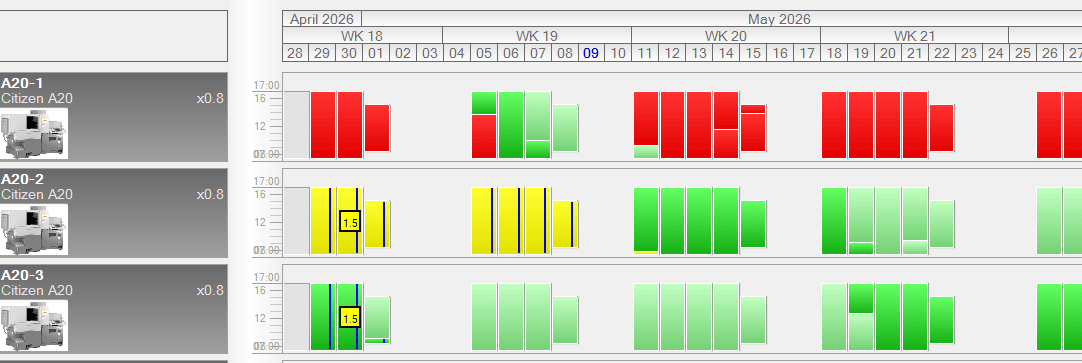
Lead times are one of the most misunderstood aspects of outsourcing precision-machined parts. The reality is that a reputable CNC machining shop will often have a queue — and that’s actually a good thing. It means they’re busy because they’re good.
Typical lead times in the UK for standard CNC turned or milled parts in moderate quantities run anywhere from 1 to 4 weeks. Complex parts with tight tolerances, post-machining treatments (anodising, plating, heat treatment), or very large quantities will take longer.
Factors that affect lead time:
- Component complexity: Multi-operation parts with tight tolerances require more setup, more inspection, more time.
- Material availability: Some grades and profiles aren’t held in stock. Raw material lead times can add days or weeks.
- Surface treatments: Anodising, nickel plating, passivation — these are often subcontracted and add time.
- Quantity: Counter-intuitively, very small quantities can sometimes take longer because setup cost and time is high relative to the run.
- Supplier capacity: A good shop during a busy period is preferable to a bad shop with immediate availability.
One thing first-time buyers often get wrong: assuming faster is always better. If a supplier can turn around complex CNC turned parts in 48 hours with no questions asked, ask why.
6. In-House vs. Outsourced CNC: The Honest Breakdown
Some businesses reach a point where they question whether it’s worth bringing CNC machining in-house. Here’s a straightforward comparison:
For most businesses — unless you’re machining a very high and consistent volume of a single part type — outsourced CNC is both more economical and more flexible. You’re not buying machine time you don’t use, training and retaining skilled machinists, or managing maintenance contracts.
What you are doing is building a relationship with a supplier who understands your components, your tolerances, and your timelines. That relationship becomes genuinely valuable over time.
7. Quality: What to Expect and What to Ask For
Quality in CNC machining is not a vague concept — it’s measurable. Here’s what you should be asking about when you first engage a new machining supplier.
Inspection and measurement
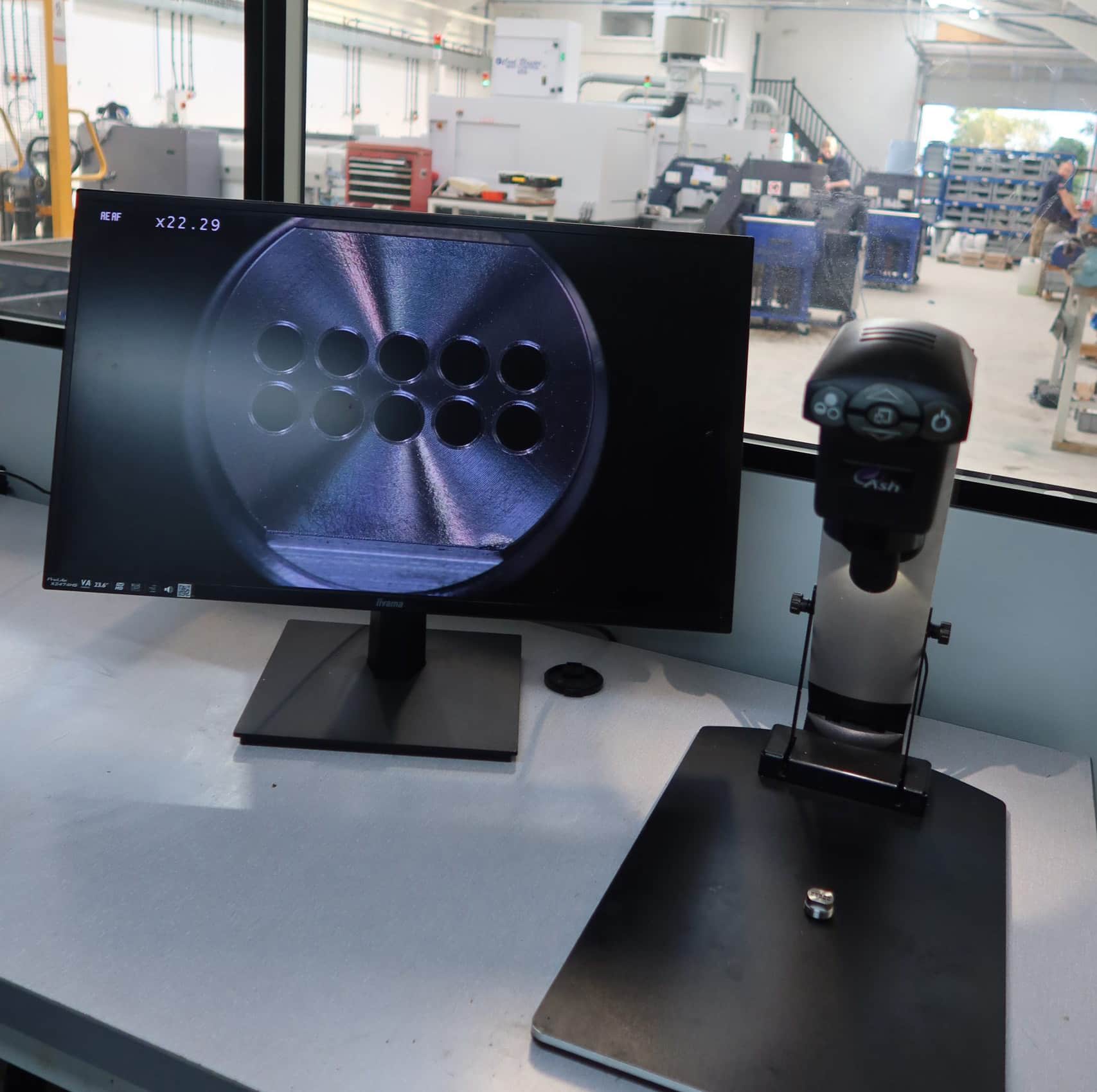
Any credible precision engineering business will have coordinate measuring machines (CMM), micrometres, bore gauges, and surface-finish measurement equipment. They should be able to provide inspection reports confirming that parts are within tolerance — either routinely or on request.
Quality management systems
ISO 9001 certification is a baseline indicator that a supplier has documented quality processes. It doesn’t guarantee perfect parts, but it does mean there’s a system in place to catch and address non-conformances. Ask whether they hold certification and whether it covers the full scope of their machining work.
First article inspection (FAI)
For any new part, ask for an FAI report. This is a dimensional check of the first production part against your drawing, confirming everything is in tolerance before a full production run proceeds. It’s standard practice among serious precision engineers and a basic safeguard for you.
We work to tight tolerances as standard, with full inspection capabilities and traceability across all production batches. If you need specific test reports or material certificates, just ask at the quoting stage.
8. Tolerances Explained: A Quick Reference for Buyers
Tolerances define how much variation from the nominal dimension is acceptable. Getting this wrong, in either direction, causes real problems.
Tighter tolerances cost more because they take longer, require better tooling, and demand more rigorous inspection. If you’re specifying ±0.01mm on a feature that doesn’t functionally need it, you’re paying for precision you don’t require.
9. Frequently Asked Questions
10. Choosing the Right CNC Machining Partner: 7 Things to Check
Not all CNC machine shops are created equal. Here’s a practical checklist for evaluating a new supplier:
- Range of materials: Can they machine aluminium, brass, stainless steel, and plastics? A shop limited to one or two materials may not grow with your needs.
- Processes on offer: CNC turning, CNC milling, Swiss machining — having multiple processes in-house reduces supply chain complexity.
- Inspection capability: Do they have CMM equipment? Can they provide dimensional reports?
- Quality certification: ISO 9001 as a minimum. Ask for the scope of certification.
- Communication: Do they come back to you promptly? Do they ask good questions? First impressions matter.
- Track record: How long have they been operating? Who are their clients? References are reasonable to ask for.
- Lead time honesty: A shop that gives you a realistic lead time upfront is better than one that promises the world and delivers late.
Wrapping Up: The First Order Is Just the Beginning
Here’s the truth about outsourcing CNC machining for the first time: the first order is rarely the smoothest. There’s a learning curve on both sides. You learn how to communicate your requirements more clearly; your machining partner learns your typical applications, tolerances, and preferences.
What matters is that you start with a supplier who’s worth building that relationship with. One who treats your first enquiry with the same rigour as your hundredth. One who asks the right questions, returns accurate quotes, and delivers consistently.
Sheldon Precision has been manufacturing precision CNC components for clients across the UK since 2014. We machine aluminium, brass, stainless steel, mild steel, and engineering plastics — turning, milling, and Swiss machining under one roof. If you’re ready to send us a drawing, get in touch for a no-obligation quote. And if you’re not ready yet — keep this guide handy for when you are.